How a Denver Brain Injury Lawyer Builds a Persuasive Claim


A brain injury claim is rarely won on sympathy alone. Jurors may feel for an injured person, adjusters may acknowledge that a concussion or traumatic brain injury sounds serious, and defense counsel may even concede that something happened. None of that is enough. A persuasive claim is built brick by brick, with medical proof, careful timing, credible witnesses, and a clear theory of how the injury changed a person’s life.
That work matters even more in brain injury cases because the most serious harm is often hard to see. A broken femur appears on an X-ray. A spinal fracture can be measured. A brain injury often lives in the gap between the person someone used to be and the person who came home after the crash, fall, assault, or work incident. That gap must be explained with precision.
A seasoned Brain Injury Lawyer Denver families trust does not simply gather records and send a demand letter. The lawyer builds a story that can survive skepticism. In many cases, the central challenge is not whether the accident occurred. It is whether the brain injury is real, whether it was caused by this event, and whether the losses are as significant as the injured person says they are.
The claim begins long before a lawsuit is filed
The strongest brain injury cases often start with disciplined work in the first days and weeks after the incident. By then, the injured person may be dazed, exhausted, forgetful, or unusually emotional. Family members may be focused on getting through each day. Insurance companies know that confusion creates openings. Gaps in care, incomplete histories, and offhand comments in medical records can all become ammunition later.
A lawyer who handles these cases well starts by slowing the chaos down. The immediate goal is to preserve facts before they fade. What happened at the scene? Who saw the person before and after? Did the injured person lose consciousness, become disoriented, repeat questions, vomit, complain of light sensitivity, or struggle to find words? Those details matter because early symptoms often become the backbone of a causation argument.
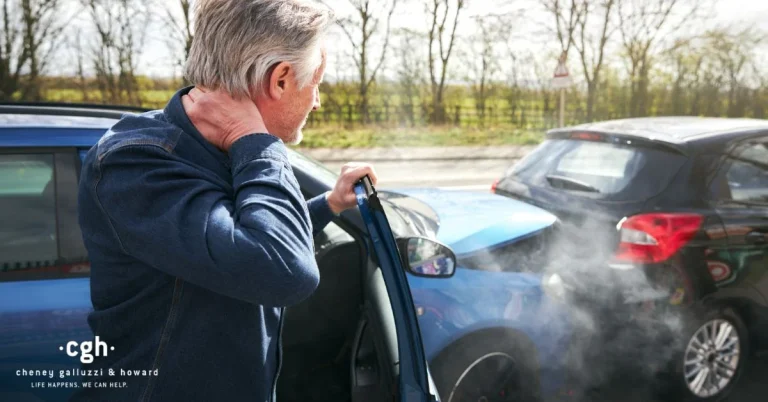
Take a common Denver example: a rear-end collision on I-25 during stop-and-go traffic. The property damage may look modest in photographs. The client may have walked away and declined an ambulance. Two days later, the headaches start. A week later, they cannot tolerate screens for long, forget meetings, and become irritable with their children. A month later, an adjuster argues that low vehicle damage means low injury potential. That argument is familiar. A persuasive lawyer anticipates it from the start and gathers the evidence needed to answer it.
Why brain injury cases are fought so hard
Defense lawyers and insurers tend to challenge brain injury claims for several practical reasons. Symptoms can be subjective. Standard imaging is not always dramatic. Many mild traumatic brain injuries do not produce obvious findings on a CT scan. People often look normal in a waiting room, at a deposition, or in a short surveillance clip. They may be able to dress neatly, make eye contact, and speak politely, yet still struggle to organize a workday or follow a recipe.
This is where experience changes the quality of the case. A persuasive claim does not rely on one dramatic fact. It layers proof from different directions until the defense explanation becomes less believable than the plaintiff’s account.
At a high level, the lawyer is trying to prove four things:
- the event was serious enough to cause a brain injury
- the client showed symptoms consistent with that injury
- those symptoms were not fully present before the event
- the injury has produced measurable losses at home, at work, or both
That sounds simple on paper. In practice, each point has to be supported by evidence that can withstand cross-examination.
The first medical records can shape the entire case
One of the hardest truths in personal injury practice is that the first medical note often has outsized influence. Emergency departments are busy. Patients are scared, medicated, and not always articulate. Providers are trying to rule out emergencies, not write litigation-ready narratives. If the record says “denies head strike” or “no loss of consciousness” or “alert and oriented x4, no focal deficits,” the defense may treat those phrases like final truth.
A good lawyer reads those records closely but does not panic over a single bad line. Instead, the lawyer looks for context. Did the patient arrive focused on neck pain and later realize their memory was impaired? Did a spouse notice personality changes after discharge? Did an urgent care visit a few days later document worsening headaches, dizziness, and concentration problems? Was there confusion in the ambulance report? Were there workplace or school records showing immediate decline?
Brain injury litigation often turns on pattern recognition. One note rarely decides the case. A sequence of notes can.
The lawyer also pays attention to what was not asked. Many non-specialists do not perform deep cognitive screening after a crash or fall. If a patient says, “I have a headache,” the chart may not capture slower processing speed, word-finding problems, sensory overload, sleep disruption, or executive dysfunction. Those symptoms may emerge more clearly in follow-up care with neurologists, neuropsychologists, physiatrists, therapists, and primary care physicians who have time to observe the patient over weeks or months.
Causation is built through timing, consistency, and context
Causation is the heart of the claim. The lawyer must connect the defendant’s conduct to the brain injury in a way that feels medically grounded and factually honest. In Denver cases, that may involve a car crash, a ski collision, a dangerous property condition, a construction incident, or an act of violence. The legal theory varies, but the causation work shares common features.
Timing matters. Symptoms that begin immediately or soon after the event are easier to connect than symptoms first mentioned months later. Consistency matters too. If the client reports headaches, dizziness, and concentration problems to multiple providers over time, the defense has a harder time calling the complaint exaggerated or invented. Context matters most when there are complicating factors, such as a prior concussion, migraine history, ADHD, anxiety, depression, substance use, or age-related cognitive decline.
Those issues do not destroy a case, but they do require candor and judgment. The most persuasive lawyers do not hide preexisting conditions. They address them directly. If a client had migraines before the collision but worked full time and managed family life without cognitive breakdown, the question becomes whether the new event aggravated an existing vulnerability and changed the client’s functioning. Juries understand aggravation when it is explained plainly.
A lawyer may say, in substance, that the client was not a blank slate before the injury, few adults are. The real question is whether this incident made life materially worse. That is a credible frame because it matches real life.
Neuropsychological testing can help, but only if it fits the case
Clients often assume that one specialized test will prove everything. Sometimes it helps a great deal. Sometimes it becomes a distraction. Neuropsychological evaluation can be powerful because it can document deficits in memory, processing speed, attention, executive functioning, and other domains. It can also distinguish between different explanations for impairment, at least to a point.
Still, testing is not magic. Results depend on effort, timing, baseline functioning, educational history, mood, sleep quality, medication use, and the skill of the evaluator. A lawyer with experience in brain injury cases knows when testing will clarify the case and when it may complicate it.
For example, a high-performing executive with no meaningful psychiatric history who develops obvious cognitive deficits after a severe crash may benefit from formal testing that quantifies decline. By contrast, a client with a long history of depression, insomnia, prior concussions, and inconsistent treatment may produce a more mixed testing profile. That does not mean the claim lacks merit. It means the case needs a broader narrative and perhaps stronger testimony from treating providers and lay witnesses.
The choice of expert also matters. A good expert does more than interpret scores. The expert explains what those scores mean in daily life. If processing speed is impaired, what does that look like in a billing office, on a construction site, or in a classroom? If executive functioning is reduced, why does the client now miss deadlines, burn meals, or forget medication? That translation from data to daily consequences is where many claims either gain force or lose the jury’s attention.
The client’s life before the injury becomes evidence
Brain injury cases are deeply personal, and that makes pre-injury life unusually important. A persuasive lawyer learns who the client was before the incident in practical detail. Not in slogans, but in habits.
Was this person the one who handled the household budget? Did they coach youth sports? Were they meticulous at work? Did they remember birthdays, appointments, and passwords without effort? Did they commute daily through Denver traffic, manage a team, cook dinner, and still help children with homework? Those are not sentimental details. They are baseline function.
After the injury, the lawyer looks for concrete changes. Maybe the client now leaves burners on, gets lost driving familiar routes, avoids noisy restaurants, naps every afternoon, or bursts into tears for reasons they cannot explain. Maybe they return to work but need sticky notes on every monitor and still cannot keep pace. Maybe they seem normal to casual acquaintances but collapse from mental fatigue after an hour of concentration.
The defense often exploits the difference between appearance and function. “You drove here today, correct?” “You posted on social media, correct?” “You attended your daughter’s recital, correct?” Each question implies capacity. A persuasive claim answers that tactic by painting a fuller picture. Yes, the client drove here, but they got lost once on the route. Yes, they attended the recital, but they needed earplugs, left early, and slept for three hours afterward. Function exists on a spectrum. Good lawyering makes that visible.
Lay witnesses can be as important as experts
Some of the strongest testimony in a brain injury case comes from people with no professional stake in the result. Spouses, siblings, close friends, coworkers, supervisors, teachers, and longtime neighbors often provide the most believable account of change over time. They can describe the before and after in ordinary language.
A husband may say his wife used to run three calendars at once and now panics when the grocery store is crowded. A supervisor may explain that a once-reliable employee now needs repeated instructions and misses simple details. A teenager may describe a father who used to help with algebra but now loses track of the question halfway through. Those observations carry weight because they are specific and hard to fake in bulk.
A Brain Injury Lawyer Denver residents hire for serious injury work often spends significant time preparing these witnesses, not to script them, but to sharpen their memory and help them avoid vague statements. “She’s different” is true but weak. “Before the fall she handled payroll for twenty employees, and after the fall she could not balance her own checkbook without help” is much stronger.
Damages have to be proved in real terms
Many brain injury claims rise or fall on damages. A jury needs a reasoned basis to understand the loss, not just a broad sense that the injury is unfortunate. Lawyers build damages through records, testimony, vocational analysis, and practical demonstration.
Economic losses may include past medical bills, projected future care, lost wages, reduced earning capacity, and household services the client can no longer provide. Some of those categories are straightforward. Others require careful support. Reduced earning capacity, for instance, is not simply a guess that the client will earn less in the future. It may require work history, education records, employer testimony, tax returns, and expert analysis about job demands the client can no longer meet.
Non-economic damages are just as important and often harder to communicate. Mental fatigue, sensory intolerance, headaches, irritability, sleep disruption, emotional flattening, and loss of confidence can hollow out a person’s life without leaving a visible mark. Lawyers who do this well stay away from melodrama. They show the jury how the injury affects an ordinary Tuesday. That is often more persuasive than a dramatic speech.
Consider a client who returns to work after a concussion and technically keeps the same job title. On paper, the defense may say there is no wage loss. In reality, the client may survive only because coworkers quietly cover mistakes, a spouse manages every household task, and the client spends each evening in a dark room recovering. A persuasive claim captures that hidden cost.
Documentation that often strengthens the case
The most effective brain injury files are rich in detail, not bloated with paper. The lawyer is looking for documents that reveal function over time and corroborate the client’s account from different angles.
Useful proof often includes:
- emergency records, imaging, follow-up visits, and therapy notes
- employment files, attendance records, performance reviews, and wage history
- school records, if the injured person is a student or younger adult
- witness statements from family, friends, and coworkers who knew the client before and after
- journals, calendars, or symptom logs that track headaches, fatigue, confusion, and missed activities
A symptom journal, when done carefully, can be especially useful. Not because it proves everything by itself, but because it creates a consistent record of daily struggle. The best journals are plain and factual. “Headache 7/10 after 45 minutes on laptop. Missed son’s game because noise triggered dizziness. Slept from 4 p.m. To 7 p.m.” That kind of note is more persuasive than broad statements about constant suffering.
The defense will look for alternative explanations
Every serious brain injury claim should be built with defense themes in mind. If the plaintiff’s lawyer waits to address those themes until mediation or trial, the case is already behind. Common defense arguments include stress, aging, preexisting psychiatric conditions, medication side effects, prior injuries, poor sleep, unrelated medical issues, and secondary gain.
Sometimes the defense points to ordinary life strain. A client may have had a demanding job, teenagers at home, financial pressure, and pandemic-era stress before the accident. All true. But if the client was handling those pressures competently before the injury and could not do so afterward, that distinction matters. The lawyer’s task is to separate background stress from clinically meaningful decline.
Social media is another recurring issue. A smiling photo at Red Rocks or a holiday gathering will be waved around as if it disproves a brain injury. Good lawyers defuse that by setting expectations early. A single image captures a second, not the recovery period before and after, the accommodations that made the outing possible, or the crash in symptoms that followed. Jurors usually understand this if it is explained with restraint and supported by testimony.
Denver cases bring local realities into play
Claims are always shaped by place. In Denver, that can mean collisions on busy corridors, winter slip-and-fall cases, recreation-related injuries, and a population that includes professionals whose jobs demand sustained concentration and screen time. For a software engineer, accountant, pilot, healthcare worker, teacher, or project manager, subtle cognitive deficits can be career-threatening even when the person still appears physically capable.
That local context affects damages. A worker in a cognitively demanding role may suffer a dramatic reduction in employability from symptoms that an outside observer might dismiss as mild. Difficulty multitasking, slowed processing, or sensory overload can derail performance in offices where deadlines, digital communication, and sustained attention drive the job. A lawyer who understands that workplace reality can present lost earning capacity more convincingly.
Local treatment patterns matter too. Access to specialists may take time. Clients often bounce between primary care, neurology, vestibular therapy, speech therapy, and mental health support before the picture becomes clear. Gaps do happen. A persuasive attorney does not ignore them but explains why they occurred, whether because of delayed referral, insurance problems, childcare pressures, or the very cognitive impairment that made scheduling and follow-through difficult.
Settlement value often depends on whether the case looks trial-ready
Insurers pay more attention when a claim is organized for trial rather than assembled for convenience. That means the lawyer is not just collecting paper but developing a coherent presentation. Liability proof is lined up. Treating providers are identified. Problem records are addressed. Witnesses are prepared. Damages are grounded in evidence rather than aspiration.
Mediation can be productive in brain injury cases, but only when both sides can assess risk realistically. If the plaintiff’s package is thin, the defense will discount the claim heavily. If the case file shows careful medical development, credible witness support, work impact, and a lawyer who understands the medicine, the negotiation changes. The question is no longer whether the injury exists. The question becomes what a jury might do with it.
That is the real leverage in a persuasive claim.
https://maps.app.goo.gl/YSXApeasgfqxNKpf8What injured people can do to help their lawyer help them
Clients play a major role in the strength of the case, especially in the first six months. Perfect compliance is not realistic for someone dealing with cognitive symptoms, but effort and honesty matter. The best lawyer in the world cannot fix a record that is repeatedly undermined by silence, missed appointments without explanation, or inaccurate histories.
Several habits make a meaningful difference. Keep medical appointments as consistently as possible. Tell providers about cognitive and emotional symptoms, not just pain. Be candid about prior concussions, mental health history, and earlier treatment, because those facts will surface anyway. Save employment records, out-of-pocket expense receipts, and notes from supervisors if work performance changes. If symptoms fluctuate, say so. Brain injuries often do.
One practical point deserves emphasis. Many clients minimize symptoms because they are embarrassed, determined to push through, or afraid of sounding dramatic. That instinct is understandable and often costly. The medical record can reflect only what the provider is told and what the provider observes. A lawyer cannot build a persuasive damages case out of symptoms that were never documented.
The best claims feel truthful at every level
When brain injury litigation goes well, it is rarely because of one dramatic expert or one explosive deposition. It is because the entire claim hangs together. The mechanism of injury makes sense. The medical course is understandable. The witness testimony is consistent. The work and home losses are concrete. The hard facts are faced directly rather than hidden.
That kind of case does not read like a sales pitch. It reads like a life changed by an event that should not have happened.
For someone living with post-concussive symptoms or a more severe traumatic brain injury, the legal process can be exhausting. Memory problems, noise sensitivity, fatigue, anxiety, and frustration make even routine appointments harder. A capable Brain Injury Lawyer Denver clients rely on understands that the job is not only to argue but to organize, clarify, and reduce the burden where possible.
Persuasion in these cases comes from discipline. It comes from asking better questions early, recognizing weak spots before the defense does, and turning a scattered medical and personal history into a coherent claim. That is how a serious brain injury case is built, and it is why the strongest results usually come from preparation that starts long before anyone enters a courtroom.
CGH Injury Lawyers
Address: 2701 Lawrence St Ste 201, Denver, CO 80205
Phone number: +17206698062
FAQ About Brain Injury Lawyer Denver
What to avoid after brain injury?
After a brain injury (such as a concussion or traumatic brain injury), protecting your brain from physical, mental, and chemical stress is critical to proper healing.
What is a brain injury lawyer?
A brain injury lawyer (or Traumatic Brain Injury / TBI lawyer) is a personal injury attorney who represents individuals who have suffered concussions, contusions, hemorrhages, or other forms of brain trauma caused by someone else's negligence, recklessness, or intentional harm.
Can traumatic brain injury be cured?
A traumatic brain injury (TBI) cannot be strictly "cured" in the sense of reversing permanent cell death or restoring the brain to its exact pre-injury state. However, the brain possesses a remarkable ability to heal and adapt.
Ends · STEPHENROAH916